Stress Analysis

Static Stress Analysis

We perform static stress analysis across the full mechanical scope of a facility — piping, pipelines, pressure vessels, skid packages, structures and their foundations. Load cases cover pressure, deadweight, thermal expansion, snow, lifting, and settlement, confirming that every component stays within its code-allowable limits. Using industry-leading analysis software alongside our own automation tools, and following the applicable ASME, CSA and API standards, we deliver fast, consistent and reliable results.

Dynamic Stress Analysis

Occasional and dynamic load cases beyond the static envelope — slug and surge loading, water hammer, relief-valve reaction forces, harmonic loading from rotating and reciprocating equipment, seismic and wind — evaluated with response-spectrum, harmonic and time-history methods where the event demands it. Where cyclic loading governs, we carry the analysis through to fatigue assessment. And when the source of the excitation is uncertain, our field vibration and strain-gauging teams can measure the actual response, so the model is validated against what the asset is really doing.

Buried Pipeline Stress

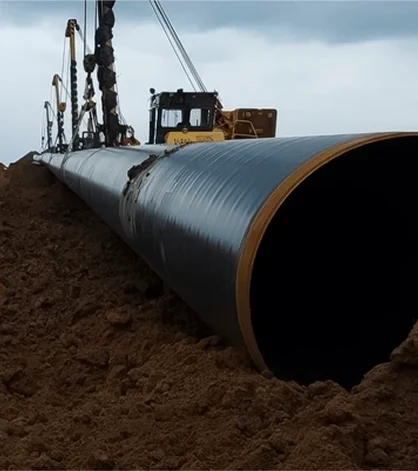
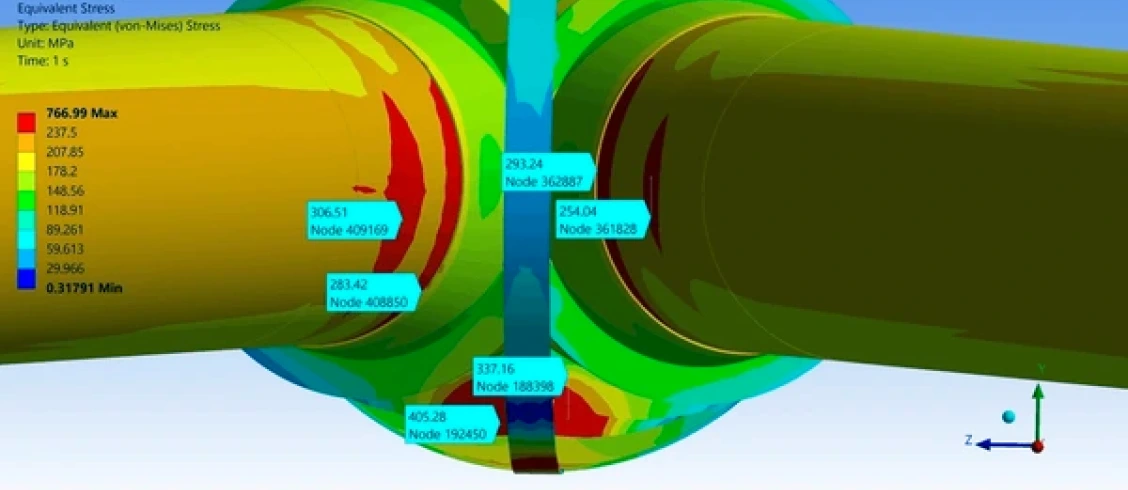
Stress analysis of buried lines where soil restraint governs behaviour: thermal expansion of fully and partially restrained pipe, virtual-anchor evaluation, riser and station tie-in analysis, and large-diameter lay and restraint analysis for compressor and pump stations and pipeline assemblies. We also evaluate the load cases that arrive from above and below — depth of cover and surface loading from vehicles and heavy equipment, uncased crossings, and soil settlement — and can establish baseline stress for existing pipelines directly from ILI centerline data, flagging locations that approach allowable stress or strain limits. Where longitudinal strain governs, assessment moves from stress-based to strain-based criteria.

Support & Restraint Optimization

Selection and optimization of supports, springs and restraints — reducing count and cost while keeping stresses and equipment loads within allowables, for both new designs and problem lines already in service.